Why do charging stations need a SIM card?
SIM cards enable communication between charging station and backend – independent of local networks. This is especially important at locations without stable WiFi or LAN.
Reliable IoT connectivity for your charging infrastructure. Manage SIM cards centrally, switch providers without hardware changes, and ensure uninterrupted station communication.
Industrial-grade IoT SIM cards ensure your charging stations are always online. Automatic failover and multi-network coverage minimize downtime.
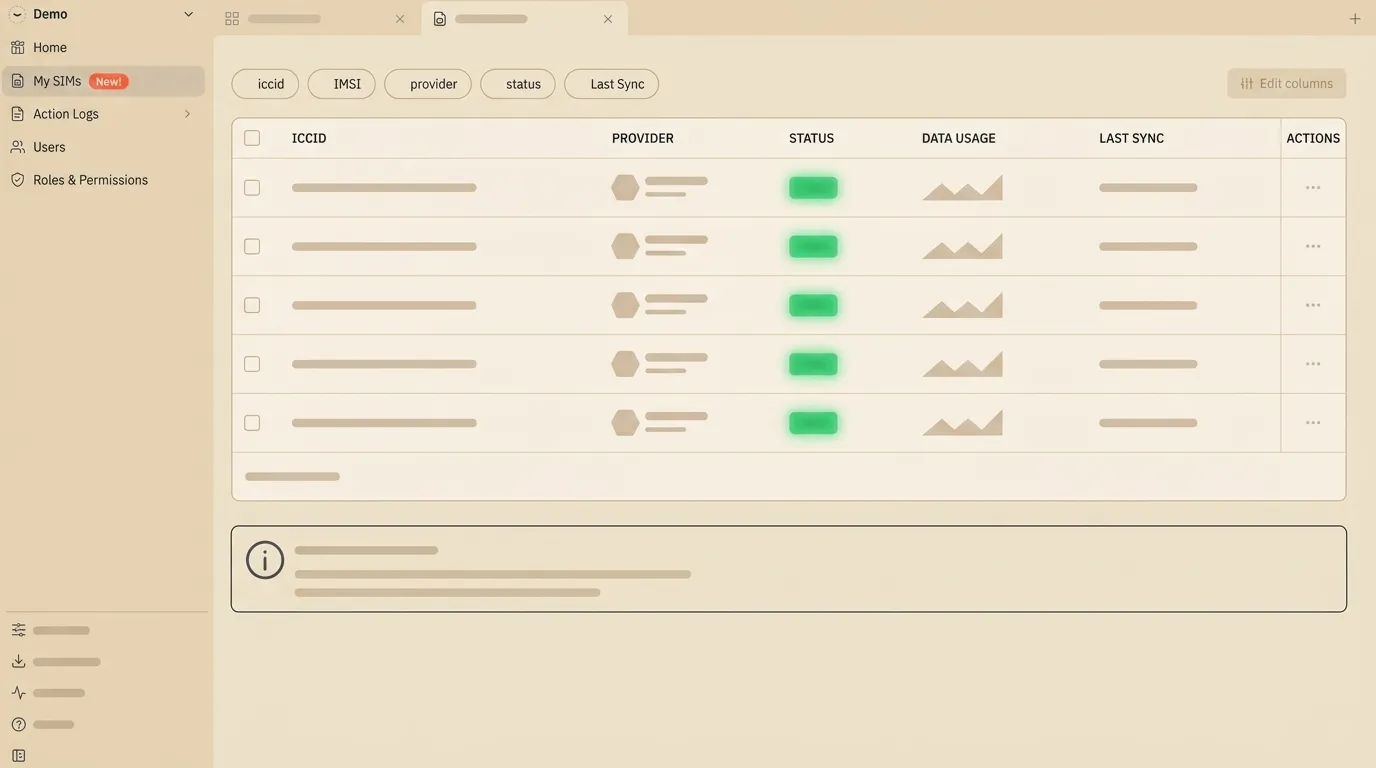
Monitor, activate, and manage all SIM cards from a single dashboard. Real-time data usage tracking and automated alerts for connectivity issues.
Switch between SIM providers without replacing hardware. Our platform supports eUICC and multi-IMSI technology for seamless provider transitions.
Deep integration with 1NCE – Europe's leading IoT connectivity provider. Flat-rate data plans optimized for M2M communication in charging infrastructure.
Everything about SIM card integration – from connectivity to provider switching.
SIM cards enable communication between charging station and backend – independent of local networks. This is especially important at locations without stable WiFi or LAN.
OB7 supports all common IoT SIM providers, including 1NCE, Vodafone IoT, Telekom IoT, and more. Thanks to eUICC technology, you can switch providers flexibly.
Multi-network SIMs automatically switch between available networks. If connection is lost, the station buffers data locally and syncs when reconnected.
Yes, with eUICC-enabled SIM cards, you switch providers remotely via the OB7 dashboard. No on-site visit, no card replacement required.
A typical charging station uses 5-20 MB per month. OCPP communication is very data-efficient. IoT flat rates cover this need cost-effectively.
The OB7 dashboard shows the connection status of all stations in real-time. For connectivity issues, you receive automatic alerts via email or push.